01
Scope map
I know you want to build ai chatbot.
There are 10 lakh+ agencies, 5 crore+ vibe coders, and 1 crore+ developers out there right now. You found this page anyway. That's not an accident, we're still the best of all of them at what we do.

We're Sachin and Arjav. We started this studio together, and we still personally work on every project that comes in. When you reach out, it's one of us who replies, not a support team. And we'll say it straight: bring us your toughest deadline or the idea three other agencies said no to, that's exactly where we do our best work. We're Indian founders too, so don't stress about the budget upfront, tell us what you've got on a call and we'll figure out what fits.
Forget the price tag for a second.
Tell me your actual budget, not what you think you're supposed to say, and I'll tell you honestly what we can build in it. No stretch quote, no upsell.
Ask five studios what an AI Chatbot costs in Andhra Pradesh, and you will get five different numbers. That is normal. It usually just means nobody defined the scope yet. As a simple guide, ₹25,000–60,000 gets you a real MVP to test your idea. ₹1–2.5 lakh gets you the full version most businesses actually launch with. ₹5–12 lakh+ covers big builds with heavy integrations and security needs. Once you know which of these three you actually need, a quote stops feeling random. It becomes something you can check against real work.
Every region has its own quirks that a copy-paste estimate misses. The market in Andhra Pradesh is no different. Andhra Pradesh pairs Visakhapatnam's emerging IT corridor with a large agri-commodity trading economy across Vijayawada and Guntur that's still largely offline. It sounds like a small detail, but it is exactly the kind of thing that separates a real, scoped number from a template number. If a studio's quote in Andhra Pradesh looks identical to what they would quote someone building the same thing somewhere else, that is worth asking about. Ask how local realities shaped their number. The answer tells you a lot about how carefully they actually thought this through.
If you want to guess what ai chatbot will actually cost, stop counting screens and start asking about whether it's grounded in your own docs/data via RAG or just answering from a fixed script That is where the real engineering hours go. Here is a simple example. A checkout screen looks the same in a design file whether it connects to a fake database or a real payment system with fraud checks. The screen took a designer one afternoon either way. But the engineering behind it can take a day, or it can take three weeks. This is exactly why two studios can quote very different numbers for what looks like the same feature list.
Process is easy to underrate until you have been burned by not having one. Before work starts on an AI Chatbot, there should be a real founder workshop, not a sales call dressed up as one. It should nail down priorities and what "done" actually looks like for version one. That clarity is what makes sprint-based delivery actually work. Weekly demos matter because they force the team to show real, working software on a fixed schedule. That makes it very hard for a project to quietly drift off course for a month without anyone noticing.
A five-phase delivery system that ensures your product ships fast, right, and built to scale.
A realistic range for ai chatbot: 6 to 10 weeks for an MVP focused on one core flow, 3 to 5 months for a version with the full set of features a real launch needs, and 6 months or more once you are building for enterprise scale. The gap between the estimate and the real delivery date usually comes down to a few common causes. Integrations with outside systems that turn out to have thin documentation. Compliance reviews that run on someone else's schedule. And the simple fact that building for two platforms takes more than double the work of building for one.
The real worry with remote teams is almost never the work itself. It is whether you will actually know what is happening day to day, especially across time zones. The fix is not forcing overlapping hours. It is building communication that does not need them. A working demo every week, so you always see real software, not a status update. Clear notes on decisions as they happen, so nothing depends on someone's memory weeks later. And async handoffs, so the team keeps moving your project forward while you are offline. This approach often beats same-timezone teams, because it forces clear writing that in-person teams often skip.
A much cheaper quote for ai chatbot is not automatically a red flag, but it is worth a direct question: what got cut to hit that number? Usually it is one of three things. QA shrinks from real testing on real devices down to the developer checking their own work. Post-launch support, where most real issues actually show up, either is not included at all or barely covers anything. And senior engineers, who catch problems before they get expensive, get replaced by a less experienced team. Any of these can be a fair trade if you know about it upfront. The problem is when you only find out after launch.
Here is the honest truth. No article, including this one, can tell you exactly what your ai chatbot will cost. Only a real conversation about your actual idea can. So let's have that conversation. Message us or hop on a free call, and you will get a straight, specific answer from the people who would actually build it. Not a sales script, not a follow-up form, just a real answer. No pressure either way, and no obligation to ask.

We embed AI natively, not as a feature, but as the foundation your product is built on.
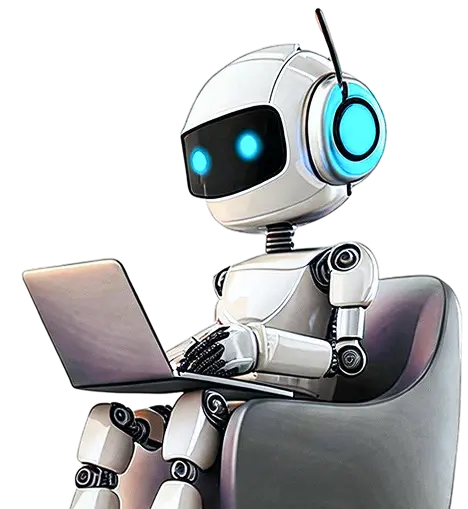
AI is not a feature we add at the end, it's the foundation we build from. Every MojoStudios product is designed to be intelligent, adaptive, and faster than what your competitors can ship.
THIS MEANS
An MVP typically costs ₹25,000–60,000, a mid-complexity build runs ₹1–2.5 lakh, and an enterprise-grade version costs ₹5–12 lakh+. Exact pricing depends on scope, we scope it for free before any commitment.
Built on proven frameworks, modern stacks, and tools trusted by global teams